
By Sam and Harry Farhat, Founders of Meadan
We’ve had a few people ask us why we rebranded. It wasn’t a strategy exercise. It wasn’t a response to a competitor, or a numbers problem, or a marketing team telling us we needed a “refresh.” It was closer to the opposite of that. We looked at how the business presented itself and realised it wasn’t really saying anything about who we are, and maybe never had.
What we started as, and what we never stopped being
We started this business as brothers who liked building things properly. That’s a plain way to put it, but it’s true, and it’s stayed true for over thirteen years now. We’ve never been the kind of builders who just execute a brief and move on to the next site. We care about the design decisions. We care about whether a client actually likes living in the home we’ve built for them, not just whether it was handed over on time and on budget. That part of us was never really up for debate.
What was up for debate, at least in hindsight, was whether the brand around us was saying any of that. A lot of our early materials could have belonged to any builder. Solid, professional, forgettable. Not wrong, exactly, just not us. And the longer that gap sat there, the more it started to feel like something worth actually fixing, rather than patching around the edges as we grew.
Why we called it Meadan in the first place
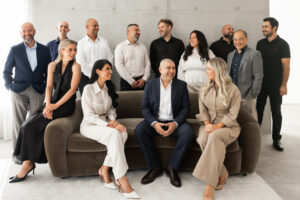
When we first named the business, we wanted a word that meant something, not just a surname stitched onto “homes” or “constructions.” Meadan is our word for a gathering place, and that’s genuinely what we set out to build: a company for people who shared the same vision and wanted to do things a bit differently, together. Clients, tradespeople, the people we’ve brought in over the years to lead the business alongside us.
That idea has held up. It’s just taken this long for the rest of the brand to actually reflect it.
Why “design-led” isn’t just a phrase for us
We use the words “design-led” a fair bit now, and we want to be clear about what we actually mean by it. For us it means the design conversation isn’t an afterthought bolted onto a construction process. It’s where we start. It’s the questions we ask a client before we ask about their budget or their timeline: how do you want to live in this home, what does a normal Tuesday look like for your family, what should this place feel like when you walk in the door after a long day.
That’s always been how we’ve worked, project by project, client by client, first across Sydney and New South Wales, and more recently into Brisbane and the Sunshine Coast alongside Andrew and Jason, who lead our Queensland team. The rebrand didn’t create that approach. It just gave it a name and a look that actually matches it, instead of hiding it behind branding that could have said anything.
Why Queensland matters to this story
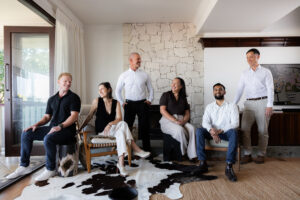
We don’t think this rebrand would mean much if it only reflected where the business started. A big part of why we felt the need to get this right now is that Meadan isn’t just a Sydney story anymore. Andrew our Queensland General Manager and Jason our Queensland Construction Manager, lead our operations across Brisbane and the Sunshine Coast. Andrew’s background is in civil construction and infrastructure projects, Jason’s is two decades of hands-on carpentry and site experience, and together they’ve built a Queensland team that holds itself to the same standard we set out with in New South Wales, not because we asked them to copy it, but because it’s genuinely how they build too.
That matters for the brand, because a name and a look that only made sense in one state was never going to hold up as we grew. Every client we take on in Queensland gets the same dedicated project team and hands-on leadership approach a client in New South Wales gets, backed by the same family values that started this business. The rebrand needed to say that clearly, not leave it as something clients only discovered once they were already working with us.
Why “people first” isn’t just a phrase either
The same goes for the other half of it. We’ve built this business on relationships that outlast the handover date. Clients who call us years later because they trust our opinion on something unrelated to the original build. Clients who refer their siblings, their friends, their own kids when they’re ready to build. That kind of trust doesn’t come from a good logo. It comes from actually treating someone’s home like it matters to you, not just as a project on a schedule.
It’s also why we’ve kept the business the size it is. Staying smaller than we could be isn’t an accident, it’s what keeps us close to every stage of a build, rather than a name on a contract somewhere. We wanted a brand that reflected that instead of talking over it. Something that felt considered rather than corporate, personal rather than generic. Not because it makes for a nicer pitch, but because it’s simply closer to how this business has always run.
What actually changed
Not much, if we’re honest, and that’s kind of the point. The way we approach a brief hasn’t changed. The way we choose materials hasn’t changed. The way we talk to a client on-site hasn’t changed. What’s changed is that the business finally looks and sounds like the people running it, instead of looking like a template we’d inherited early on and never got around to updating.
We didn’t rebrand to become a different company. We rebranded because the old branding was quietly getting in the way of people understanding who we already were.
What matters most
If there’s a real reason behind all of this, it’s just that: alignment. Making sure that what someone sees before they ever meet us actually reflects what they’ll experience once they do, whether that’s a conversation with us in New South Wales or with Andrew and Jason’s team in Queensland. Design-led and people-first aren’t new ideas for us. They never have been. They’re just, finally, the actual words on the page, wherever in the country you’re reading them.